Sunday, October 30, 2011

Six weeks and counting

As you can imagine, Gene and I have been busy getting ready for Bean. Last weekend we went to Bellingham, WA, for a "babymoon". We bought a Groupon for a "romance package" at the Chrysalis Inn back in March... as it turns out, I was 1 week pregnant at the time. The special was for a gorgeous corner suite with a massive jetted tub. Each of us took 2 baths in rose-scented water overlooking the lovely harbor. We watched cable, which we don't have at home, lounged around, and took naps. It was glorious.

While in Bellingham we had dinner at the home of friends, Jenn and Matt. They have 2 charming boys and Jenn writes another locavore blog. Jenn, a fantastic cook, prepared butternut squash soup, roasted lamb shanks, and polenta. We contributed a bottle of red from our wine collection and enjoyed a wonderful evening with their family.

Yesterday we were in a childbirth preparation class for 9 hours.  Whew.  I'm glad that item on our to-do list is done.  Next weekend we're going on a tour of the hospital in the morning, and my baby shower is later that afternoon.  On Sunday, I'm doing nothing.  NOTHING!!  We've been so scheduled lately that we both need a break.  Besides, I have a feeling that I'll spend part of Sunday organizing Bean's nursery.

My dad's birthday was just last week.  It was a big one: 64.  Why is that big?  Just listen to this Beatle's song.

In his 65th year my dad will finally become a grandfather.  In fact, he'll be a grandfather in, at most, 6 weeks.  Just look at my tummy!!  Bean is clearly growing well, despite my own weight loss and super low carb diet.
My bump, my bump, my lovely baby bump

My dad loves trains.  I mean, he loves trains.  People who work on real trains call people like my dad "foamers" because of rainfans' tendency to foam at the mouth about train operations. 

My brother and I grew up counting train cars and knowing the correct names of each type of car.  We knew that any time we were in a car ans saw a train, Dad would pull over and we were to watch it.  There was always a model train going around the Christmas tree.  My dad built a 20' diorama in the basement, complete with handmade trees and tufts of grass.  He's in the process of building another one in his bedroom.  His collection of train books and DVDs (imagine a mind-numbingly boring narrated 50-minute video of a train going up a maintain pass) is massive.  Heck, during the summer months Dad sits on his back deck, his scanner tuned to the frequency used by the engineers on the nearby rail lines so that he can listen to their conversations.

Despite Dad's love of trains, he's really really hard to shop for.  Model trains are expensive - all of his locomotives are made of brass and each costs a small fortune - and it's impossible to know if he has a particular book or not.  I don't like knick-knacks, so I prefer not to give them to others.

What to do for his birthday?!?

As it turns out, the father of Gene's coworker is a train fanatic like my dad.  This man has even written a number of books about trains in Southern California.  The best part, though, is that he owns his own locomotive.  Yes, folks, a real, honest-to-god locomotive sits in this man's backyard, and he invited us over to let my dad foam over see it. 

We didn't tell Dad where we were going.  And when we got there, you couldn't see the locomotive from the house or the road.  Ken took us around a corner a BAM!  Dad's jaw dropped.  He'd had no idea why we were at this house tucked way back in a valley.  But there it was: a locomotive he could climb on, touch, and talk shop about with a fellow foamer.  Dad was in heaven!
Dad, Rosemary, Ken Johnson, me with baby bump

This locomotive was built in Davenport, IA, and was used at the Tacoma ASARCO Smelter from 1936-1957.  I grew up practically in the shadow of the smokestack, and can remember the steam whistle signalling the shift changes.  The smokestack was pulled down sometime in the mid-1990s and the smelter's Super Fund site has undergone a complete transformation.  It's no longer an ecological disaster and is in the process of becoming the euphemistically named Point Ruston. 

After Dad had had his fill of the locomotive, Gene and I took him to lunch at the Black Diamond Cafe, which bakes all of its goods in a wood-fired oven.  They're known for spectacular breads, pies, and cakes.  The cookies didn't look too bad, either.  On the drive to lunch, we passed some rail lines and Dad excitedly gave us a history of the Stevens Pass railroad tunnels, the role of railroads in the region, and more.

It was fun to give this gift of time and local history to my dad.  Thanks so much to Ken Johnson for allowing us to visit his locomotive!

As for his Christmas present, we're still working on it and promise that he'll be delivered just in time for the holiday.

Wednesday, October 19, 2011

Saag

Let me start this post with 3 confessions:
  1. I don't know jack - Jitendara? - about Indian food, other than that it's delicious.
  2. I don't know diddly about babies.
  3. I can't stand low-carb diets.
Ironically, I've made Indian food twice this week, am 7 months pregnant, and am on a low-carb diet due to gestational diabetes.

Life is weird that way.

Friends of mine had a baby boy last month.  They've been incredibly kind and supportive as I've progressed through my own pregnancy, so I offered to take them dinner and a gift for the baby.  They gladly accepted.  Then the wife drops this bomb: she's allergic to tomatoes.

I started going through my mental recipe repertoire & excluding the things that have tomatoes in them.  Crap, that's like everything that I make this time of year.  Chili, pot roast, many soups... all out.  And because I can only have very limited amounts of carbs, no pastas either.

I remembered having seen a Veena's Market saag spice packet in my cupboard.  I bought a few of them last year around Christmas and this was the last package.  I called my friends and asked if they like Indian food and, if so, could she eat spicy food while breastfeeding.  The answer to both questions was a resounding "yes".  Saag it was!

What, exactly, is "saag"?  According to this website:

Saag, or palak, dishes are spiced purees of spinach or other greens common in northern India. They often contain additional ingredients such as potatos, fresh cheese, chicken or chickpeas to make a more substantial dish.
Gene, who doesn't like cooked spinach, loves this dish.  If you're not a cooked spinach fan, try this recipe once before dismissing it.

I wanted to make my saag with chicken.  I started out with cutting up 2 chicken breasts and cooking them in oil.  Then I just put them aside while I made the spinach puree.

Veena's instructions are to saute the spices in oil, then add chopped onions.  You have to be very careful about this because it's shockingly easy to burn the spices and ruin your dish.  Her packets are numbered for you.  (BTW, Veena is a friend of mine but I bought these packets.)

Next, you add the spinach and let it wilt - this takes about a minute.  Don't be shy about how much spinach you're using; it will reduce significantly.

From there, you put the spinach into a blender with some water and puree it.  Return it to the saucepan with the chicken to reheat, salt to your taste, and stir in a dollop of plain yogurt.  Serve the saag over rice or...

... can you guess what this is?  It's not rice.  Nor is it couscous.

This, my friends, is cauliflower!  Run raw cauliflower through a food processor until it looks like couscous.  Out it into a microwave-safe bowl and cook without water until it's done, perhaps 3-4 minutes.  Voila: low-carb rice alternative.

Because I was travelling with this dish, I simply layered the ingredients in a covered Pyrex dish and reheated it once I arrived at my friends' house.

They asked to keep the leftovers. 

As for the gift for their son, a little pair of light green merino wool booties, I completely forgot to take pictures!  The booties fit him perfectly and both parents were appreciative.  They've promised pictures, which I'll post upon receipt.

I still have so much to learn about babies.  The first time I held my friends' new son I experienced a panicked feeling of "ok, now what do I do with this little guy?".  I haven't changed a diaper since the early 1990s, if then.  I just bought some nursing bras and laughed at the sight of my boobs in holsters.  Gene, who has children from his first marriage, looks at my boobs & apologizes "for what's going to happen to them in the next few months".  Yikes.

I'll figure it out.

Monday, October 17, 2011

When to censor a blog

Nearly a year ago I wrote a carefully worded open letter to The Pioneer Woman after outgrowing her blog & finding others that were more interesting and/or relevant to our lifestyle.  A blog that is single-mindedly devoted to disliking her picked it up & linked to it.  To be honest, I don't even read that blog because I found that it could be really mean-spirited at times.

As a result of being linked from that other blog, my one post about the Pioneer Woman gets more hits & comments than all my others combined.  Some comments are supportive of my post, whose point was that I no longer found her relevant to my life and was moving on to blogs written by people I could identify with, while some comments are downright nasty.

The irony is that people have to go looking for the post to find it.  My blog isn't exactly set up with SEO terms, nor is it in the top 100 search results.

Lately some of the negative comments have gotten ugly and personal.  Commenters, many of them anonymous, have called me catty, jealous, insecure, a bully, a "hater", and more.  Most of the time I just roll my eyes and wonder if they actually even read the damn post.

Today I went back and read it. I hadn't revisited it for quite a while. A year later, I still agree with what I wrote. I also believe that my opinion was carefully written without making any low blows at a fellow blogger.

Just this past weekend someone called me mean & accused my children of being bullies... how ironic given that the opening paragraph clearly stated I was childless.  That commenter had on her personal profile that she works in education.  I'm guessing that she didn't read my post, her reading comprehension must not be very high, or that she was so angry by the time she started reading that she could do little more than skim it.

Truth be told, the snarky, bitchy comments get to me sometimes.  All comments are sent to my in-box, which helps me monitor them, and this morning I got a handful of Monday morning notifications about what a meanie head I am.  It was (sarcasm) an awesome way to start my work week.

I'm debating taking the post down.  I try hard to never "feed the trolls".  I've allowed all the negative comments to remain on the thread and have never responded.  Blogs are free speech both for me as the blogger, and for you as the reader, n'est-ce pas? 

Maybe I should ask that other blog to remove the link from their site. 

Maybe I should expound upon the caveat at the opening of the post (which starts "fans of the Pioneer Woman should stop reading now").

What advice do you have?

Saturday, October 15, 2011

Beans, the magical fruit

I got some crummy news last month: I have gestational diabetes.  Before I got pregnant I'd been working on losing weight to reduce my risk: both of my parents and one of my grandparents are diabetics.  Being over 35 while pregnant is another risk factor, though not one I could change.

While I initially took the diagnosis in stride, the past few weeks have been tough as I learn which foods spike my blood sugar and which don't.  Frustratingly, even whole wheat breads, fruit, and sugar in any form are out.  Forget the sterotype of the pregnant woman chowing down on ice cream: I'm lucky if I get a sugar-free fudgesicle.  On the bright side, I haven't gained a pound in 2 months!

Meat, nuts, cheese, and vegetables are all in.  I feel like I'm on South Beach or Atkins.  I met with a dietician to explore meal options and determine how I can best control my blood sugar levels in order to keep both baby and me in good health for the next 3 months.  I suspect that she learned more from me about sustainable foods than I learned from her about meal plans.  What a waste of a $30 co-pay.

By the way, have I told you it's a boy?  We're not telling his first name until he's here but I can say it is unusual and starts with "K".  He'll have my last name as his middle name, and share Gene's last name.  The baby - we've been calling him "Bean" - is due 2 months from today!  I feel like I've been pregnant forever.

Anyway, as I've been researching various diabetic-friendly foods and recipes I found that many of them contain beans.  Beans are a very healthy choice for people living with diabetes. 

Dried beans are a staple in my pantry but canned beans are a rarity.  The problem this creates is that I either have to make a special trip to the store or remember to soak my beans the night before I plan to use them.  This doesn't work in a spontaneous kitchen!

My solution was to can some dried beans.  I'd been meaning to do this for a while anyway and just had never gotten around to it.  I looked up instructions and found them on one of my favorite canning how-to websites, www.pickyourown.org.  I did some kidney beans and some black beans.

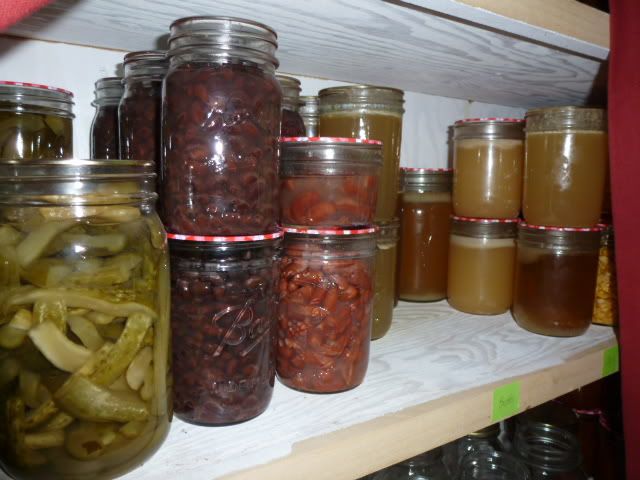
A shelf from my canning pantry: pickles, black beans, kidney beans, stocks, & corn
Why can your own beans?
  1. It's shockingly economical.  A one-pound bag of dried beans cost me $1.19 and generated about 4.5 pints of canned beans.  The equivalent amount of generic canned beans costs at least $0.69 per pint, and $1/pint or more for name brands.  In all I canned 18 pints of beans for about $4.
  2. It's stunningly easy.  If you have a pressure canner, this is about the easiest thing you can stuff into a jar and preserve: no peeling, no coring, no dicing, no measuring, and minimal preparation.
  3. It's a time-saver.  I don't have to soak or pre-cook any more beans.  I just pop open a jar and VOILA: ready-to-eat beans. 
  4. The cats don't come running when I open a home-canned jar.  They twirl around my feet incessantly any time they hear the can-opener.
  5. Reduced exposure to bisphenol A.  While there is BPA in the lining of standard Ball canning lids, the food in the jars is not in direct contact with the lids that way it is in a steel can from the manufacturer.  Tattler lids are BPA-free but I've yet to make the transition to them.

In addition to canning the beans today, I made a batch of hummus.  Making my own hummus allows me to control the ingredients, especially the salt.  Here's the recipe I used.  It's simple and you can customize the flavors easily.  Add basil and pine nuts, sun-dried tomatoes, or roasted bell peppers for variation.

Total cost was about $2.50.  I did use canned beans to make the hummus.  Did you know they are cheaper in the Hispanic foods aisle than in the canned beans aisle?  Go figure.  Dried garbanzo beans are pricey around here: the only ones I can find are either Bob's Red Mill or from the farmers market.

Friday, September 23, 2011

Things I've learned from canning tomatoes

1. If Gene takes the camera to work, I won't see it again for at least a week.

2. Rosemary loves to clean up the tomato squirts.

3. It takes 2 minutes in boiling water to get the skin on 4 tomatoes perfect for peeling.

4. It takes me 2 minutes to peel and core 4 tomatoes.

5. Pull the tomatoes from the boiling water with a ladle in your right hand.  Grab the hot tomato with your left hand using a dishwashing glove to protect from the heat.  Take 2 steps backwards across the kitchen to drop the hot tomato into the cold water in the sink.  It's an inelegant but efficient dance.

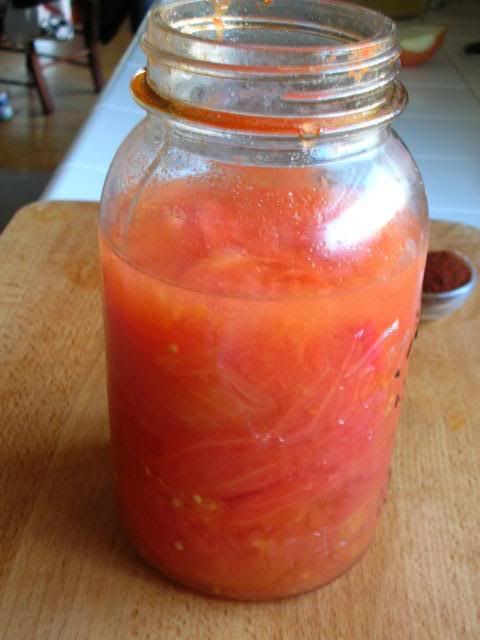
6. Canning whole tomatoes in their own juice works great for me.  I literally stuff them into a jar and squish the bejeebies out of them to get as many as possible in a single jar.

7. My hand will fit into a widemouth jar but not a regular one.

8. My hand won't fit into my mouth.  Ergo, my mouth is smaller than a widemouth jar opening.

9. It's possible to learn how to can tomatoes from the internet.  That's how I got started.  The resources for recipes and problem-solving are ever-expanding.

10. Unexpectedly, tomato jam is one of my favorite things.  It makes a fabulous and unusual gift.  I gifted so many that I have just a single jar remaining.
Photo from foodinjars.com

11. Because pressure canning tomatoes takes just 20 minutes whereas the boiling water bath method requires 90, I always pull out my pressure canner for tomatoes.  Bonus: no need to monitor the water level.

12. There's always one jar that doesn't seal.  I have to figure out what to do with that jar this weekend.

13. It's possible to can 20 pounds of tomatoes in a mid-week evening.  (see #11 above)

14. Twenty pounds of tomatoes costs around $20 in my area, unless you hit the fruit stand late in the day and the owner unexpectedly gives you a $5 discount.  Growing tomatoes for home canning in Western Washington is always a risky business due to unreliable summers.

15. It's surprising how many things you can throw a jar of canned tomatoes into: braised meats; sausage and chickpea soup; shakshuka; chili; and more.

16. No matter how carefully I mete out my supply or how many jars I can, I always run out of tomatoes.

17. Twenty pounds of tomatoes equals about twelve eleven quarts.  (see #12 above)

18. After you've been canning your own tomatoes for a few years, store-bought canned tomatoes look weird.

19. The cats come running when they hear the can-opener but completely ignore the sound of a home-canned jar being opened.  These same cats haven't had canned cat food in nearly a decade.

20. The "ping!" sound that cooling jars makes as they seal is intensely gratifying.

Tuesday, August 30, 2011

Signals of fall

I've started to notice something over the past few days.

First, I saw it in the coop.

I had my suspicions of what was happening but I was in denial.

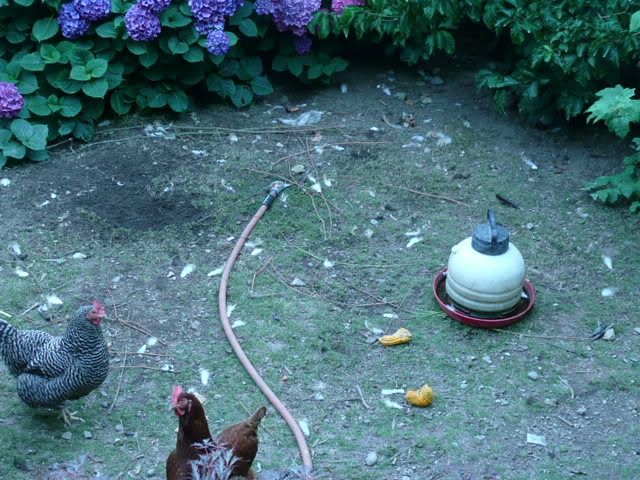
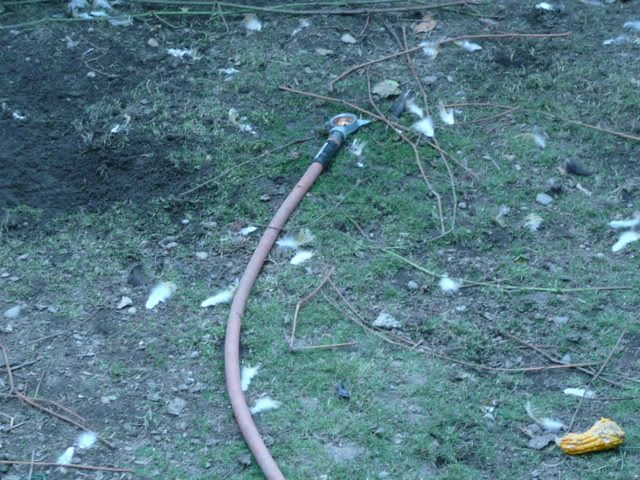
Today I came home to this, and I must now face the facts.

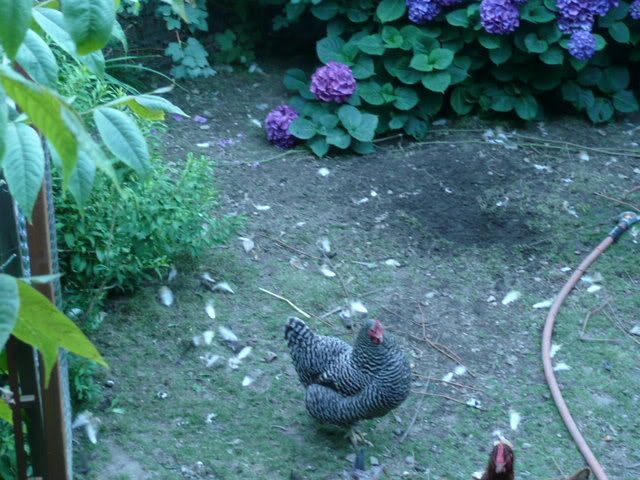
Can you see what's weird?  Not quite?  Here's another angle.

How about now?

This morning there were no feathers on the ground. 

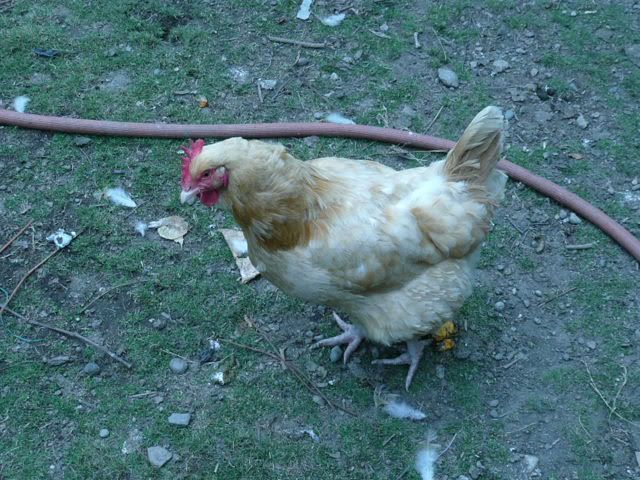
Every single feather has a yellowish tinge on the tip, meaning they all came from the same hen.  This hen.

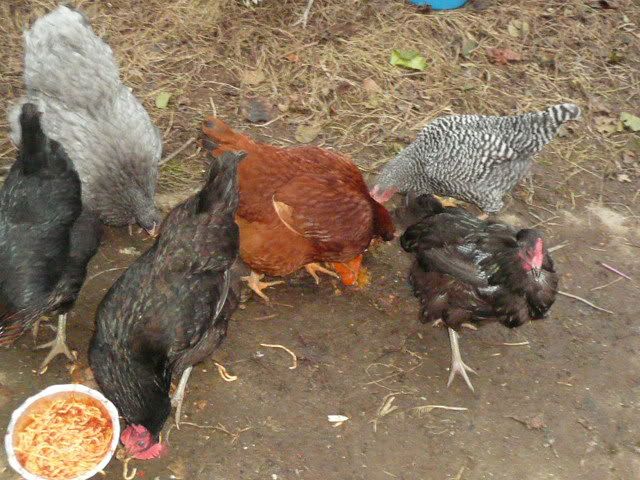
Our Buff Orpington, Curry, is molting.  I think that Croquette may be molting as well.   She went through a really hard, ugly molt last winter.  That's her on the far right:

This means 3 things.

First, Curry and Croquette probably won't lay another egg until spring.  Hens need about 2 months to recover from a molt.  As a full, hard molt - as it appears Curry is experiencing - takes a month or more.  Three months from now it'll be December.  Our girls took the winter off last year (arg).  Therefore Curry & Croquette are out of operation until April or so.  Bummer.

Second, I'm going to stop selling eggs.  Our hens went through really hard molts last autumn and we had a long, cold winter.  We got exactly zero eggs from December until perhaps April. 

Third, and most importantly, falling feathers signal autumn's arrival. 

Fall is here.

Monday, August 29, 2011

My last birthday as Jenn

I turned 37 yesterday. 

Up until then I could tell people that I was going to be 37 when Bean is born.  No longer.  Eeek.  My late 30s are here. When you're 36 you're in the mid-30s... but 37.  Wow.  On top of that, I'm nearly done with my second trimester.  Bean is due to be here in just over 3 months.

It was my final birthday as "Jenn".  This time next year I'll be some variation of "Mom".  I'm trying to savor my independence, spontaneity, and leisure to focus on a single task as long as I want - knitting, cooking, talking on the phone, chilling with Rosemary, etc. - while I still can.  Once Bean is here, I expect that my idea of "free time" will drastically change. 

I also know that in a year I'll have a hard time imagining our life without Bean.

It being my birthday, I started inviting people over.  The next thing I knew, the dinner guest list was up to 10 people for dinner and another 4-6 for cake & ice cream.

I had most of the ingredients for a Spanish paella (pie-AY-ya).  I couldn't find the recipe a friend once gave me so I looked up a few variations online and winged it.  This same friend, a former co-worker, used to loan me her paella pan.  As I rarely see her since leaving that job - and my commute to Seattle - I had to make due with my Le Creuset wannabe (seriously - the Martha Stewart stuff is OK, but it's no Le Creuset).

The great thing about paella is that if you need to stretch it, add more rice.  Paella suits my cooking sensibilities really well: you use what's on hand and call it good.  I do it in a slightly different order than many recipes but the end result is about the same.

This is more of a method for making paella and not so much a recipe.  Putting together a paella is not excessively time-consuming or difficult but it does take some prep and fore-thought.

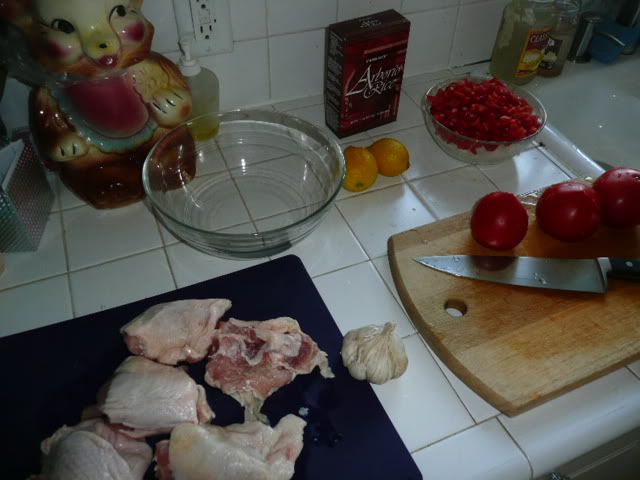
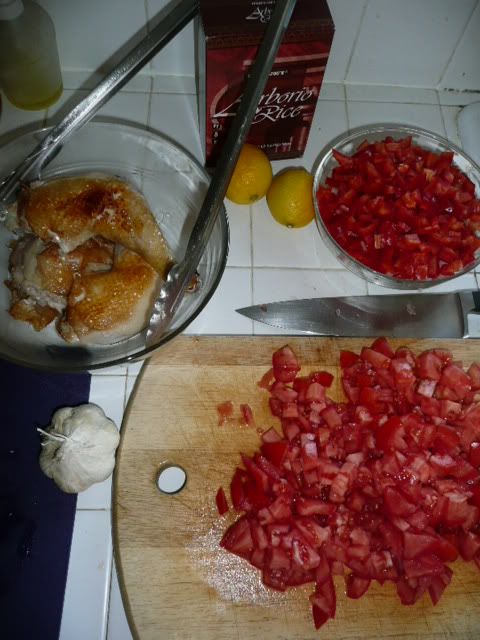
Chop the ingredients for a sofrito.  Everything should be about the same size.
1 onion
1-2 red or green bell peppers
1-2 tomatoes
4 cloves of garlic

Put the chopped stuff aside.

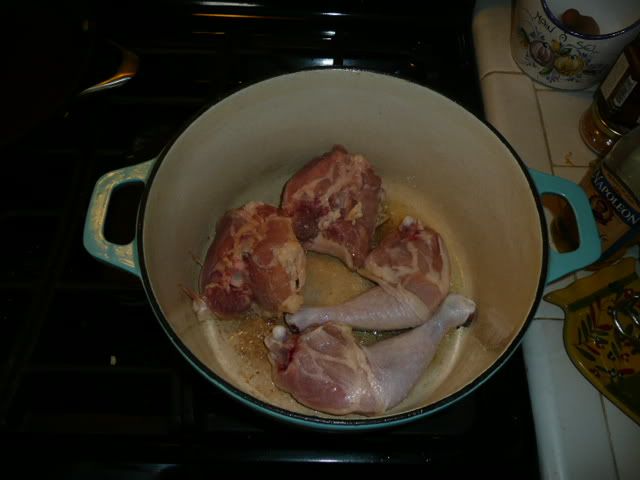
Brown the meat. 
Heat about 2T olive oil in the largest pot or pan you have.  Brown the meat in batches and put it into a bowl to set aside for later.

My freezer contained 8 chicken thighs, 2 thigh quarters, 2 pork chops, and chorizo.  So that's what went into my paella.  There are no hard and fast rules about which meats can go into a paella.  One recipe I found called for a rabbit and a chicken.  Do what you want.

This was the first time I'd put pork into my paella.  I cut it into slices the seasoned it with paprika, salt, pepper, and oregano.  I wanted it to taste distinct from the chicken, which is why I treated it this way.

If you have or can borrow a traditional paella pan, go for it.  I used an enameled cast iron pot with the most surface area I could muster.  Paella is traditionally cooked outside in the grill but we were out of propane.  It was inside on the gas flame for me.

Cook the sofrito.
Next you prepare the sofrito.  Simply throw all the chopped sofrito ingredients into the pan (drained of extra fat if necessary) and cook them down until you gat a thick paste.  This should take about 15-20 minutes and does not need constant monitoring.

After the sofrito is done you can either continue to the last stage or put it aside and wait to start up again about 30 minutes before you want to eat.

Season the sofrito and cook the rice.
All paellas, no matter their other ingredients, seem to agree on the sofrito as one of the mandatory components.  The others are saffron, which gives the paella the traditional yellow color, and rice.  Use a short-grain rice such as arborio.

At this point I added the seasonings:
1/2 tsp red pepper flakes (not traditional but it gave the meal a little kick)
1 tsp paprika
1/2 tsp salt
2 T oregano
generous pinch of saffron (Trader Joe's has one for around $6 per bottle)

Here's something I haven't done in a while:

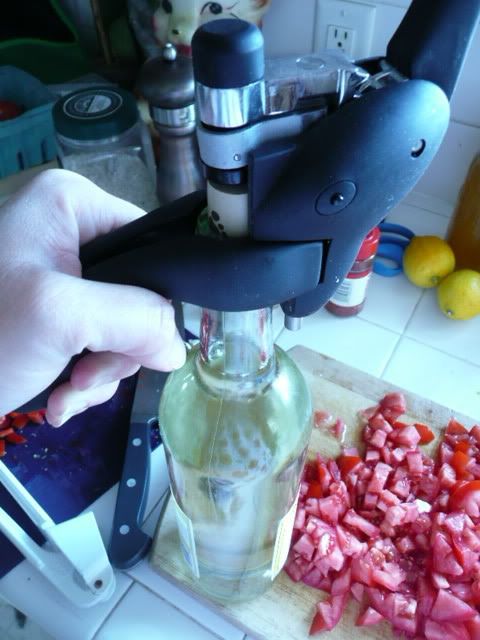
Add your rice - I used 2 cups - and 4 cups of chicken broth.  I added about 2 cups of a dry white wine at this stage as well.  The end result was soupier than I'd meant it to be but the rice did eventually absorb the extra liquid.  If you want less rice, adjust this quantity accordingly.  Keep in mind that I was planning to feed 10 people with leftovers for lunch on Monday.

Stir this sofrito-rice mix well and bring it to a simmer.  Tuck your browned meats into the rice, cover tightly, and cook on low for 20 minutes or until the liquid is absorbed.

Add seafood if wanted.
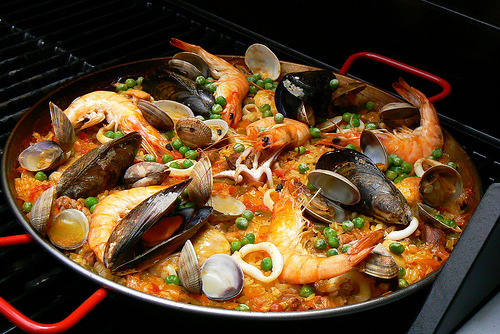
It seems that every photo you see of paella includes mussels.  You can also add squid, scallops, shrimp, or cod at the last minute for other seafood flavors.

We bought a pound of mussels for something like $3.50.  About 10 minutes before the rice was finished cooking I tossed them on top of the paella and replaced the lid. 

Not my pic... I got busy & forgot to take a photo of the finished dish.
Serve and enjoy. Offer wedges of lemon to squeeze over the plates. 

We served the paella with a beautiful spinach salad a friend had made.  We ate outside, crammed around a little table but enjoying the company.  Gene told me that nearly everyone went back for seconds.  There was a handful of little kids, all of whom quite enjoyed feeding their leftovers to the girls, one forkful at a time.  The chickens, as you may imagine, did not object.

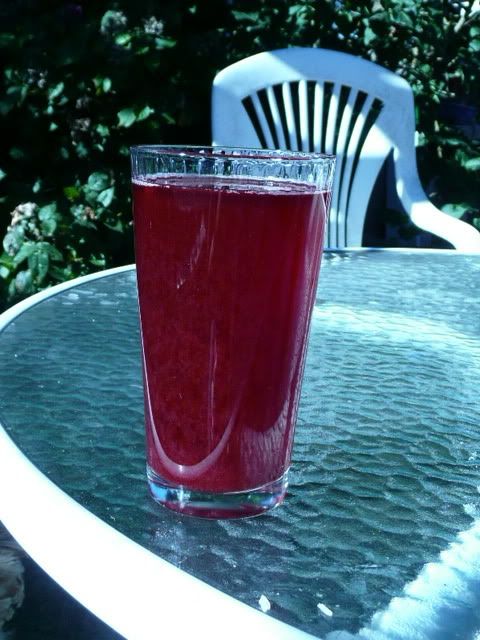
Paella goes well with beer or dry white wine.  We all had lemonade and blueberry shrub (which was shockingly popular!).

Here are some paella recipes that are less fly-by-the-seat-of-your-pants and have specific quantities
http://spanishfood.about.com/od/maincourses/r/seafoodpaella.htm
http://www.alicante-spain.com/paella.html