Thursday, August 26, 2010

Post-commuting free time

Since trading my job 38 miles away for one that's a mere 3.3 miles from home, I've been asked countless times: "what do you do with all your spare time?" 

In my old job I got up at 6:30, left the house at 7:12a to catch a bus to Seattle, worked from 8:30-5, caught the 5:08p bus home, arrived home around 6:30, made and ate dinner by 7:30, then vegged until my 10p bedtime.  I wasn't particularly productive, especially in the winter when the daylight hours are basically 8-4:30 in Western Washington.  Spending 2 1/2 hours per day on a bus really sucks the life out of you.

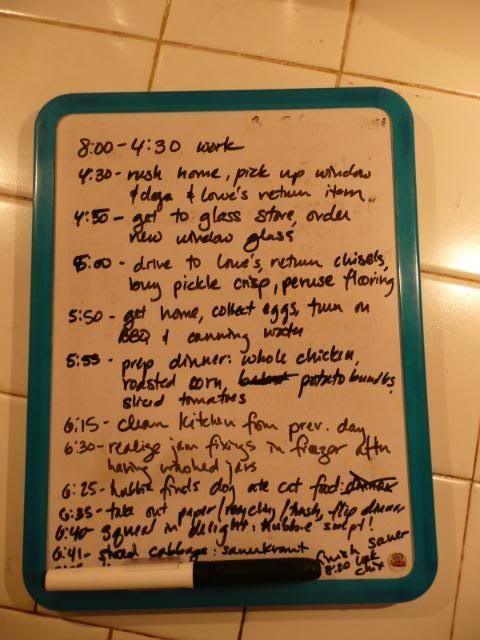
Yesterday I decided to jot down what I do in a typical day, it being fairly typical, because I was curious how my new life compares.

7:00 - get up, get ready for work
7:50 - leave for work
8-4:25 - work
4:25 - scoot out a few minutes early sp I can get to glass store that closes at 5
4:35 - dash home to grab the window I'm refurbishing, the dog, and the chisels I want to return at Lowe's
4:50 - arrive at the glass store, order new piece of glass to replace this one
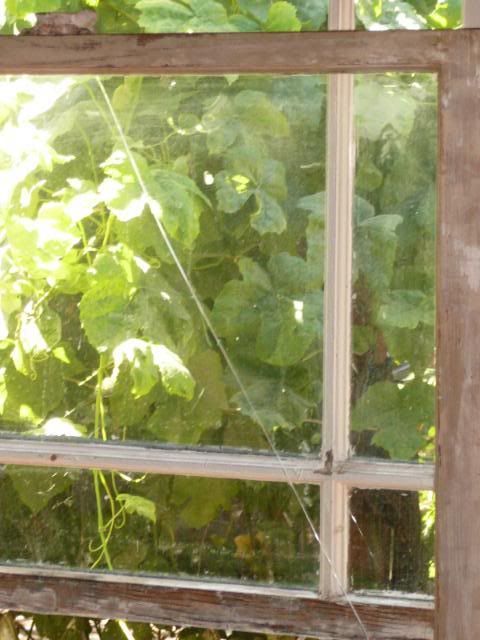
5:15 - arrive at Lowe's, get refund, mentally figure out how much the solid hardwood flooring would cost for the piece that's missing in the living room (the furnace intake used to be there at some point), buy some pickle crisp for the cukes my mom is buying for me tomorrow
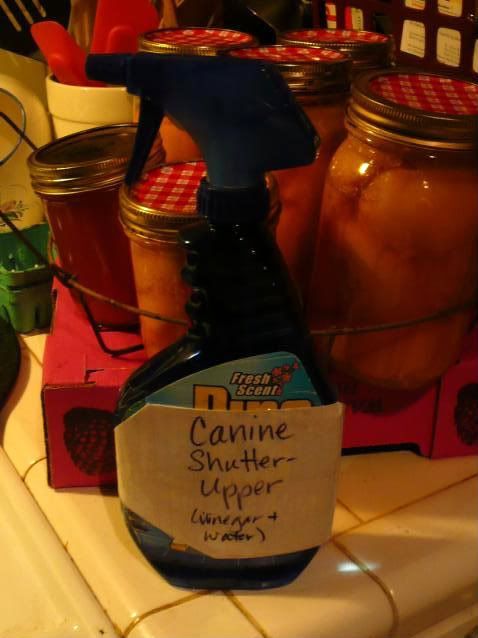
5:50 - get back home, collect chicken eggs, squirt the neighbor's barking barking barking dogs with vinegar diluted with water, preheat BBQ, turn on canning water to finish the last batch of vanilla-peach jam
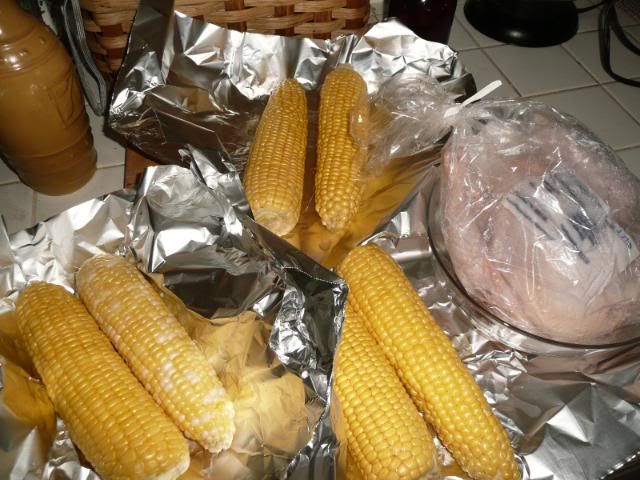
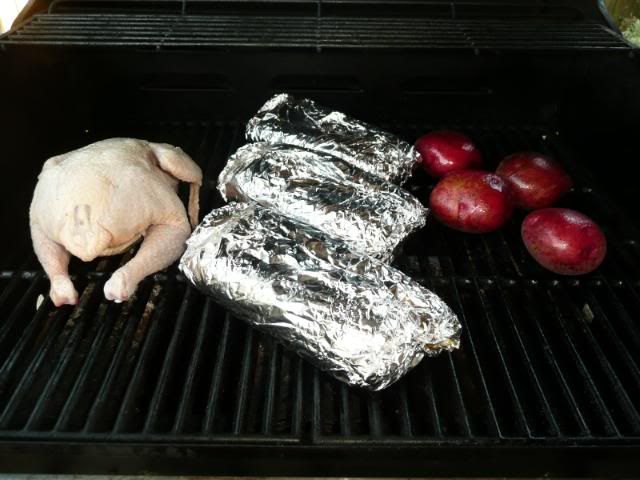
5:55 - get dinner ready for the grill: whole chicken and roasted corn from farmers markets, red potatoes from our garden
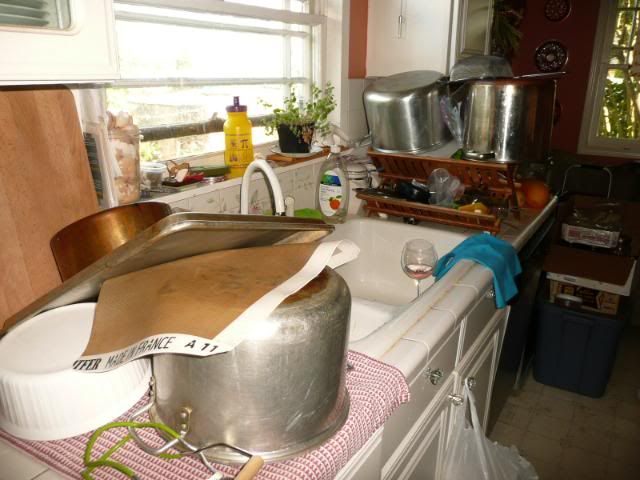
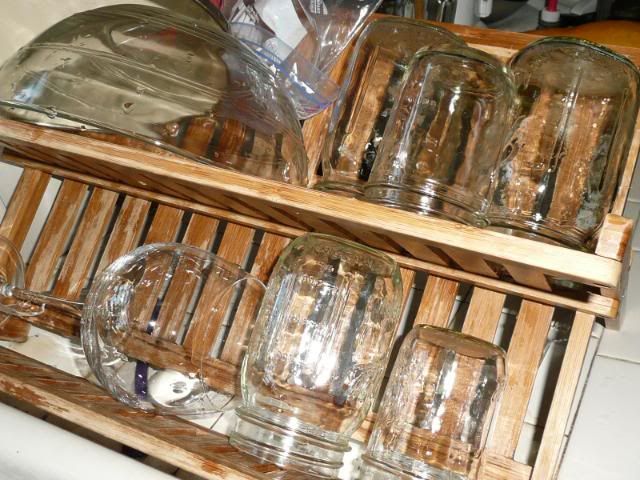
6:15 - put away dry pots and pans from yesterday's peach-canning spree, wash some jars for the vanilla-peach jam
6:25 - hubbie gets home and finds that Rosemary has eaten all the cat food, cross "feed dog" off the to-do list
6:30 - delight in telling hubbie that the spray bottle of "Canine Shutter-Upper" (patent pending) is working, hope that neighbors don't notice their dogs smell like vinegar
6:32 - realize that the jam fixings had been frozen so jars and canning water are not useful tonight
6:35 - take out recycling and trash, flip dinner on grill
6:40 - come back into house and squeal with glee upon discovering that hubbie has swept
6:41 - shred cabbage for sauerkraut and take pics for blog
7:05 - timer dings for dinner - ignore it until cabbage for sauerkraut is salted
7:10 - get dinner off the grill, plate it, pop open a hard cider, watch some TV for a bit
8:00 - transfer the sauerkraut into its resting spot for the next few weeks, put away dinner dishes, prepare leftovers for lunches tomorrow
8:20 - check to see if chickens are put away (they aren't), start this blog post
8:38 - take Rosemary outside to pee, lock up chickens, notice they're nearly out of food so refill the feeder
8:45 - start the dishwasher and settle in to watch "It's Complicated" with the hubbie (very, very funny movie)
10:45 - brush teeth and hit the hay

If I had any spare time, I'd probably read or knit but it seems I'm wasting it on sleep.

On a final note, happy 38th anniversary to my parents!

Wednesday, August 25, 2010

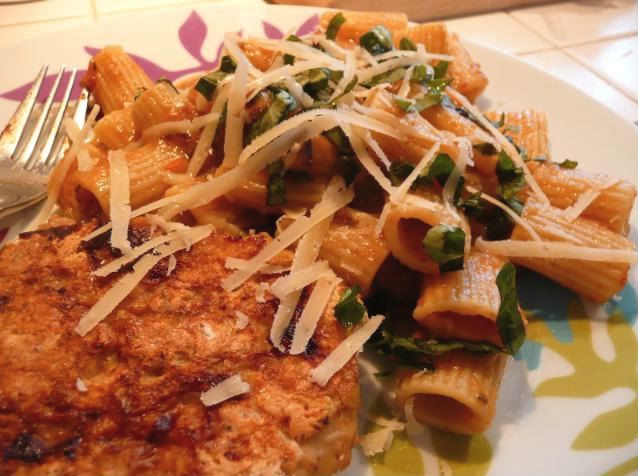
Roasted Eggplant Pasta

If you don't know by now, I'm a sucker for a farmers market.  I frequent them all summer and buy the vast majority of our perishable food straight from the people who raised it.

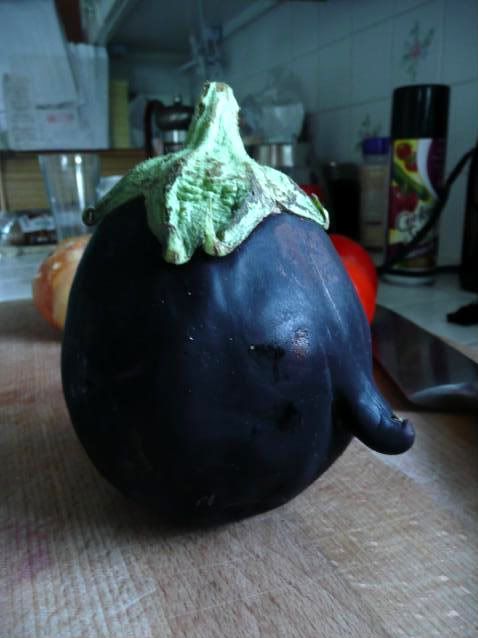
The gorgeous piles of eggplants this time of year are very enticing, even though eggplant isn't my favorite thing.

This one made me snicker.  I paid a buck and took it home.

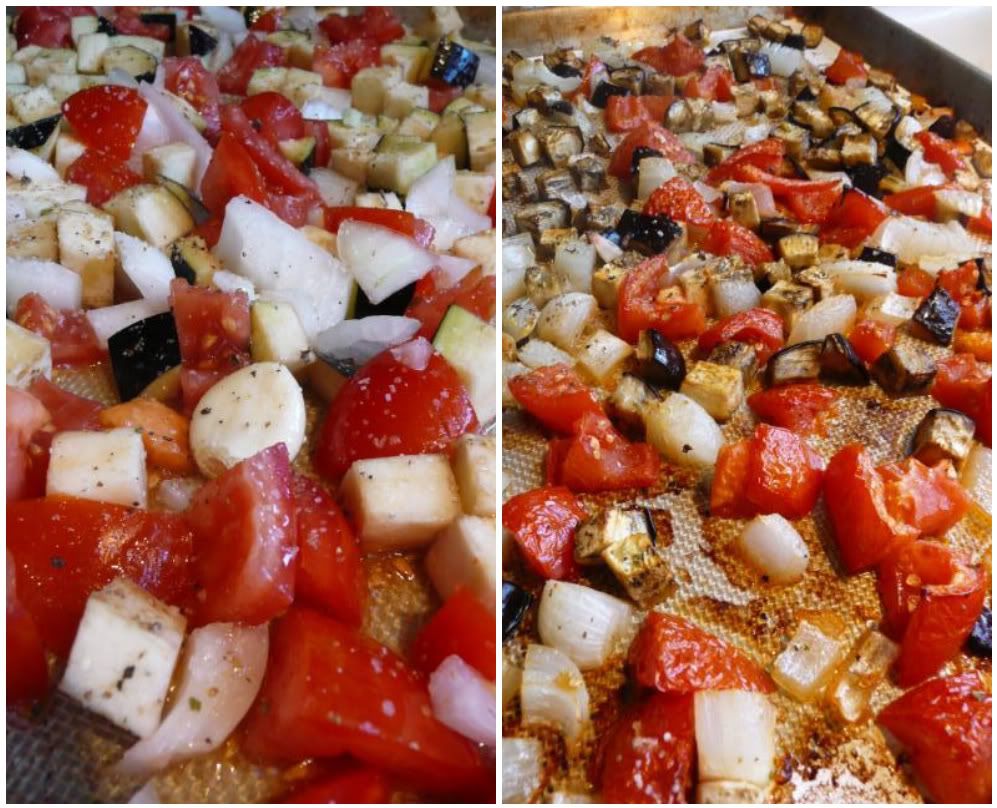
I had evil intent for the little eggplant.  I chopped and diced and sliced!  The carnage required the sacrifice of 1 onion, 3 tomatoes, and 4 cloves of garlic.  It got roasted in a 400-degree oven for 35 minutes with some olive oil, salt, and pepper. 

Use a silpat for easy clean-up.  Don't have one?  Go to a restaurant supply store and buy 2 sheet pans and one large silpat, which you can cut in half.  My hands shook in fear when I cut my brand new $25 silpat.  Know what?  Two years later, I still have 2 silpats and they work just as well as 2 $20 silpats.

While the veggies are roasting, boil some rigatoni noodles.  Save 4 cups of the pasta water.

Puree the roasted goop in a food processor.

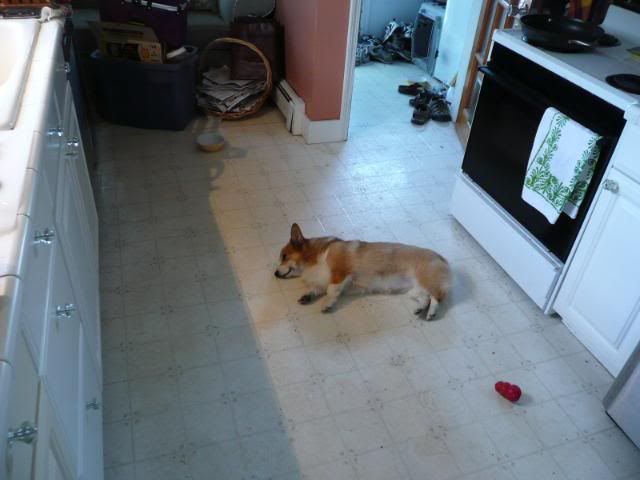
Try not to trip over the pooch, who, despite her meager 22 pounds, makes the kitchen much smaller due to her penchance for lying smack dab in the middle of the work triangle.

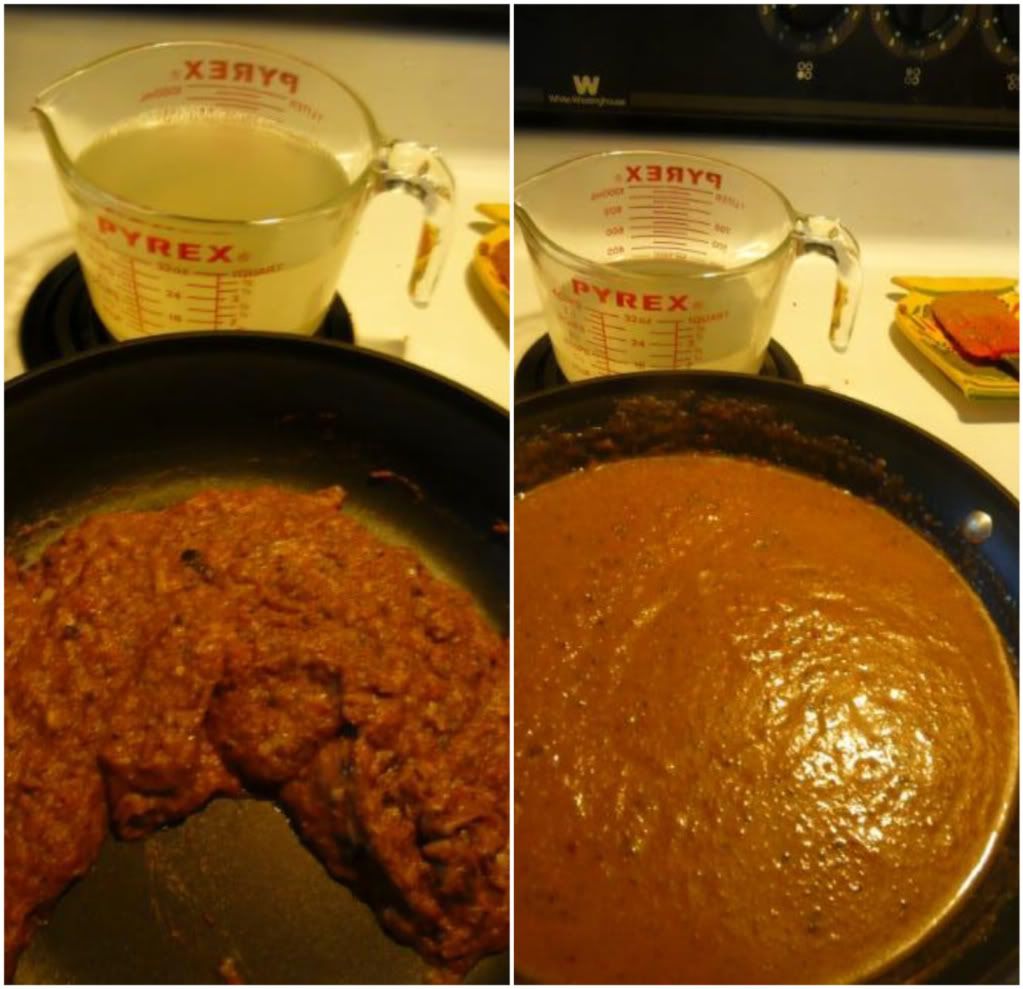
Put your pureed veggies into a sauce pan over medium-low heat.  I added some pepper flakes at this point for heat.  Mix in the pasta water about a half a cup at a time until you get a consistency like a regular pasta sauce.  Look how much water this took: well over 2 cups.

Dump the pasta into the sauce and toss to coat.  Top with shredded basil and Parmesan cheese.  I served this with a small veal patty I found languishing in the freezer.

UPDATE: I made this again for dinner last night and used canned tomatoes.  It worked great!  I reserved the juice, roasted the tomatoes with the rest of the stuff, and then added the tomato juice and pasta water to the sauce.  Perfect and no waste.  Gotta love that.

Tuesday, August 24, 2010

Recent egg recall

The recall of millions upon millions of eggs got me thinking: are the eggs from my flock safe?  I believe they are.  I tell people they are.  But to be sure, I contacted MyPetChicken, which is where I got my chicks, to ask if they certify that their hens are salmonella-free.

Here's their response (emphasis mine):
Thanks for contacting My Pet Chicken. We test Salmonella-pullorum-typhoid clean, and are H5/H7 AI monitored.  Salmonella is more of an issue with factory farmed birds, because the conditions they are kept in are simply terrible.  In fact, this isn't an illness that passes hen to hen at all, but is usually passed when hens eat rat droppings.  Yuck.

Presuming you are keeping your hens in clean conditions with fresh food and water, it is doubtful they would contract salmonella.  A hen sick with salmonella would be immediately obvious to you: weak, purple-combed, diarrhea, reduced egg production. The illness was probably obvious to those at the factory farm, too--even if they didn't notice one more symptom of the many in their abused hens, surely they would have noticed the drop in production--so it's sort of terrifying to think they just kept selling their eggs.  Worse, the supplier of the two factory farms on which the recent outbreaks occurred apparently has a long history of violations:

http://www.huffingtonpost.com/2010/08/22/egg-recall-supplier-violations_n_690400.html
If you are worried that your hens somehow have contracted this illness, you can always have them tested, but my guess is that eating your hens' eggs is probably the safest thing you or your friends could do.  Actually, this salmonella outbreak on a commercial factory farm is another good reason to keep your own hens, because you can monitor their health personally, and you can control what feed they eat and the conditions they live in.  You can see when they may need medical attention.  If you know anything about factory farms, the surprising thing here is not that there was an outbreak, but that there aren't many, many more.  Those poor chickens.
Best,
Lissa
http://www.mypetchicken.com/
I can confidently say that my hens are all healthy, as evidenced by perky appearances and alert behavior. 

And so, yes: my hens are salmonella-free.

Buttermilk pancakes with boysenberry syrup

I can't make boysenberry syrup and then NOT show you what I plan to do with it!

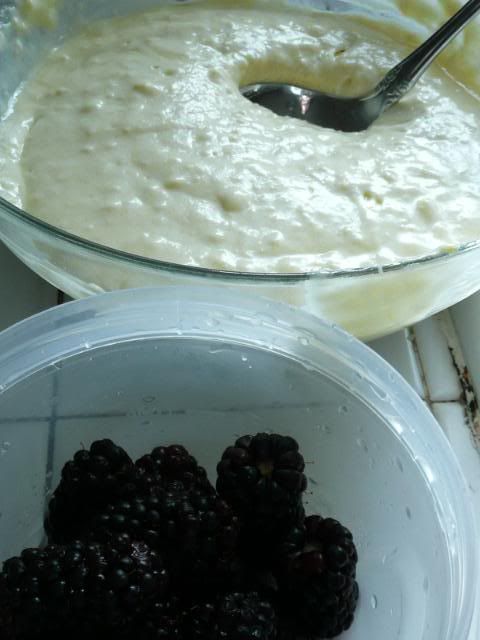
We had blackberry pancakes with boysenberry syrup.  We moaned a lot and talked very little.  I think you'll do the same.

For the pancake better (recipe adapted from Cooking Light), mix together:
1 cup flour
2 T sugar
1 t baking powder
1/2 t baking soda
pinch salt
1 cup buttermilk
1 T vegetable oil
1 egg, lightly beaten

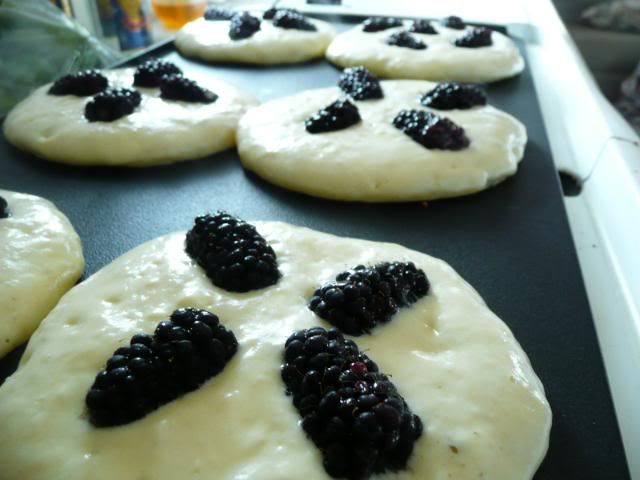
Use a ladle to measure out your pancakes onto the griddle.  That a trick I learned from my dad.

I'd bought some blackberries and we needed to eat them, so into pancakes they went.

We always - ALWAYS - heat up the syrup for pancakes.  What's the point of steaming hot pancakes if you pour cold syrup onto them?  I thought everyone did this until a friend once expressed surprise at the hot syrup.  But beware: syrup boils over very fast in the microwave.  Do it 30 seconds at a time.

Are these not 100% delectable?

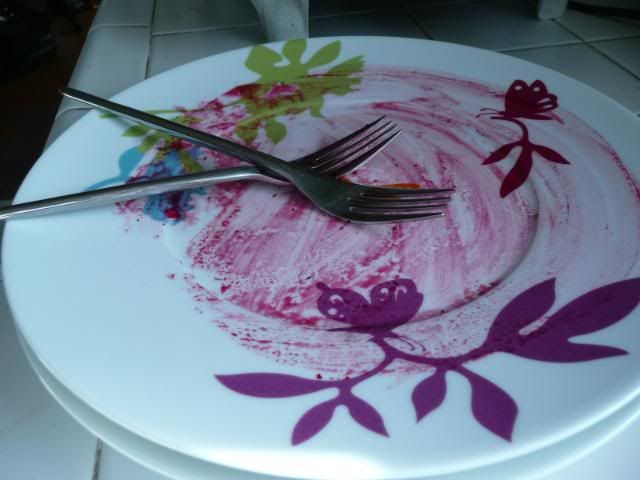
It took everything I had to resist licking the plate.

Monday, August 23, 2010

Boysenberry syrup

Berries are nearly at their end here in Western Washington, so I'm doing everything I can to eat them fresh and preserve them for posterity.  Or January.

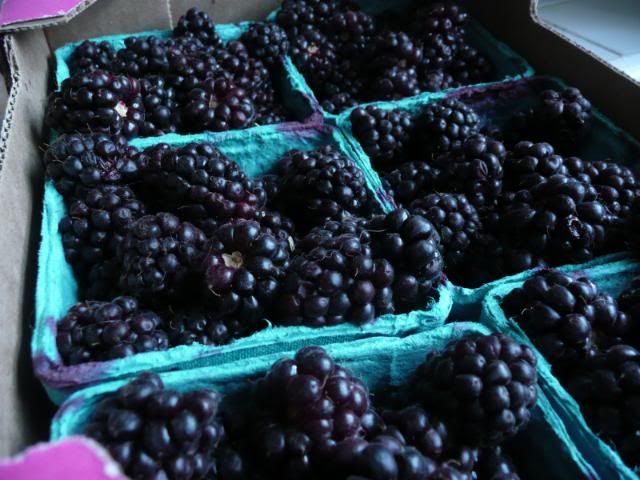
These boysenberries called to me from the stand at the downtown market I frequent.  "Jennn... JENN!  Eat us!"  The stand owner was yelling "hey, buy those first!"  Whatever.

Once at my home with my boysen-bounty I was faced with a dilemma of choice: what to do with these lush and juicy berries? 

Jam?  Nah - I have plenty.

Cobbler filling?  No - it would only make one.

Boysenberry syrup?  Ding ding ding we have a winner!

When I was a kid my dad always made breakfast on Saturday mornings.  Sometimes we had bacon and eggs, sometimes muffins, sometimes blueberry pancakes.  On days when pancakes were on the menu, boysenberry syrup was usually offered alongside the maple syrup.  That thick, sweet, purple sauce was invariably the Smuckers brand.

If you're a beginning canner, this recipe is perfect for you.  It's easy, quick, and you really can't mess it up like a jam because you don't have any pectin to manage.  Heck, if you ever make a jam that doesn't set, call it a syrup and nobody will be the wiser.

Boysenberry Syrup recipe from FineCooking.com.
  • 3 cups fresh berries (blueberries, raspberries, strawberries, or blackberries will also work), washed and trimmed as needed and halved if large
  • 1-2 cups granulated sugar
(If you want to can this syrup for long-term shelf-stable storage, please see the website for the how-to.)
In a medium heavy-duty saucepan, crush the berries with a potato masher. Add 1/4 cup water (if using strawberries, add 1/2 cup water). Bring to a boil over medium-high heat, reduce the heat to medium low, and simmer until the berries are very soft and juicy, about 5 minutes.

Set a fine sieve over a bowl. Pour the berry pulp into the sieve and allow the juice to drip through. Gently press the pulp with a rubber spatula to extract as much juice as possible, but don’t press so hard that you force the pulp through.  (I used a food mill in this step, then passed the pulp through a sieve.)

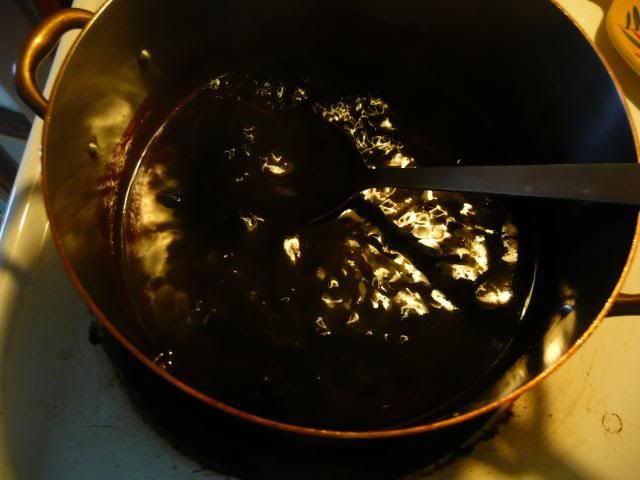
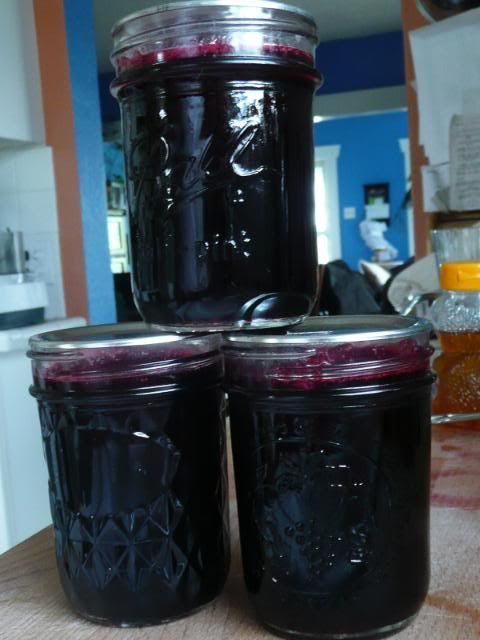
Clean the saucepan. Measure the juice and then pour it into the saucepan. For every 1/4 cup juice, add 1/4 cup sugar. Bring to a boil over medium heat, stirring to dissolve the sugar. Reduce the heat to low and simmer until the syrup is viscous but still runny, about 1 minute. Skim the foam with a spoon and pour the syrup into clean jars.

If you're not canning the syrup, put the jars on a wire rack and let cool to room temperature. Syrup that's not hot-water processed (canned) will keep in the refrigerator for up to two weeks.

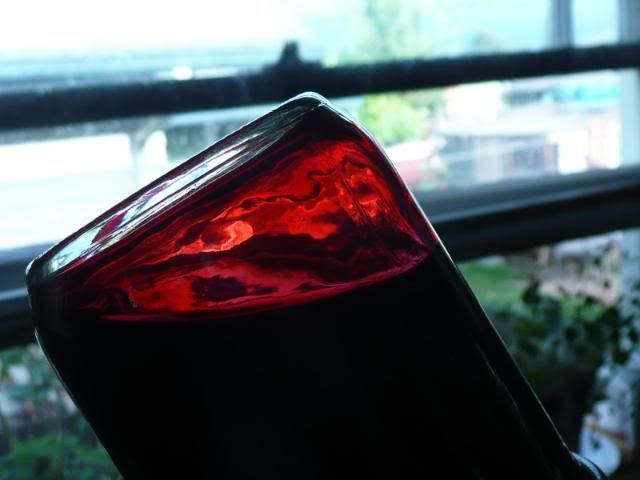
That ruby red is so pretty!

Monday, August 16, 2010

Squash & Windows

A few of my yellow squash got away from me:

Oops.

The front garden is going gang-busters.  I dug up a 5-gallon bucket of potatoes recently and tonight we'll have the gorgeous head of broccoli that is looking perfect.

Last weekend I spent many hours refurbishing one of the original double-hung sash windows in our 1924 Craftsmen home.  It's not done yet - I still have to replace the glass and paint the frame - but it's now 100% functional.  That's more than I can for any other window in our entire house.  Most of the other windows can open a little but not all the way.  My next project will be to get them all to 100%.

Should you ever wish to tackle such a project, I highly recommend the book "Working Windows" by Terry Meany.  (Disclaimer: Mr. Meany doesn't know who I am nor do I get a dime for endorsing the book.)

I'll post pics as soon as we can locate the battery charger for the camera.  I know I saw it around somewhere...

Monday, August 9, 2010

Plastic bags

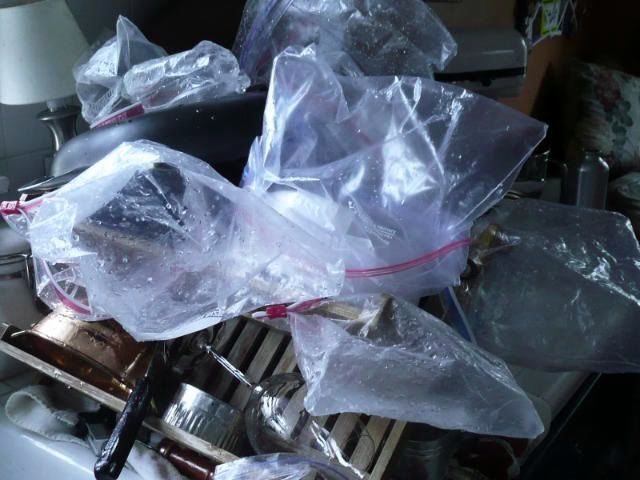
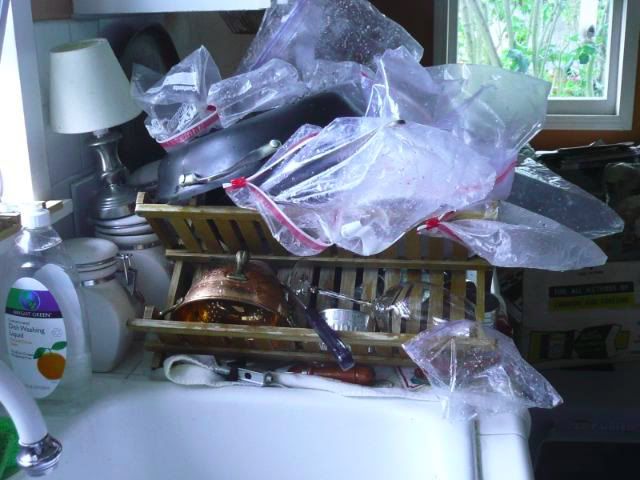
My dish drying rack looks like a jelly fish.  Or maybe a micro version of the Giant Garbage Patch in the Pacific Ocean.


My parents were horrified when they found out that we wash and reuse our baggies.  We don't do it because we're poor, or cheap (though, admittedly, we are quite frugal people).  We do it because plastic bags can be used more than once and they cannot be recycled without the recycle logo on them. 

Why not reuse them until they're good and dead?


The 3 Rs of more sustainable living are Reduce Reuse... and then finally Recycle.  In that order.

We've moved into the Reuse part and are working our way into the Reduce mode when it comes to food bags.  I'm confident that we about 90% into Reduce for shopping bags with only the occasional plastic shopping bag coming home from anywhere.

Our goal is to use no plastic shopping bags at all.  We rarely get bags at the grocery store for anything, unless it's something like grapes where you need a bag.  I recently bought the fabric to make reusable produce bags like these.  I'll show them to you when I get off my butt and actually make them.  I don't mind spending a few extra pennies for the little bit of added weight of a cloth bag compared to a plastic one.

There are lots of products on the market to use as alternatives to plastic bags:

Do you use an alternative to plastic zipper bags?  What are your thoughts?  Some of the challenges are weight (glass) or microwave-ability (metal or resin).  How do you overcome these obstacles?